Zones of Regulation
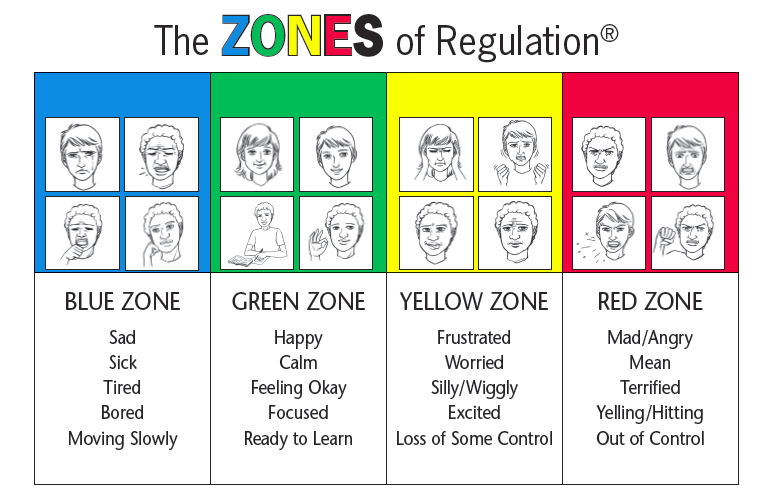
The Zones of Regulation is a framework that can be used at school and at home to support the development of emotional awareness and self-regulation. It helps students identify their feelings and energy levels by grouping them into four colour-coded zones. All zones are natural, and the focus is on recognising how we feel and using strategies to manage emotions and return to a calm, ready-to-learn state.
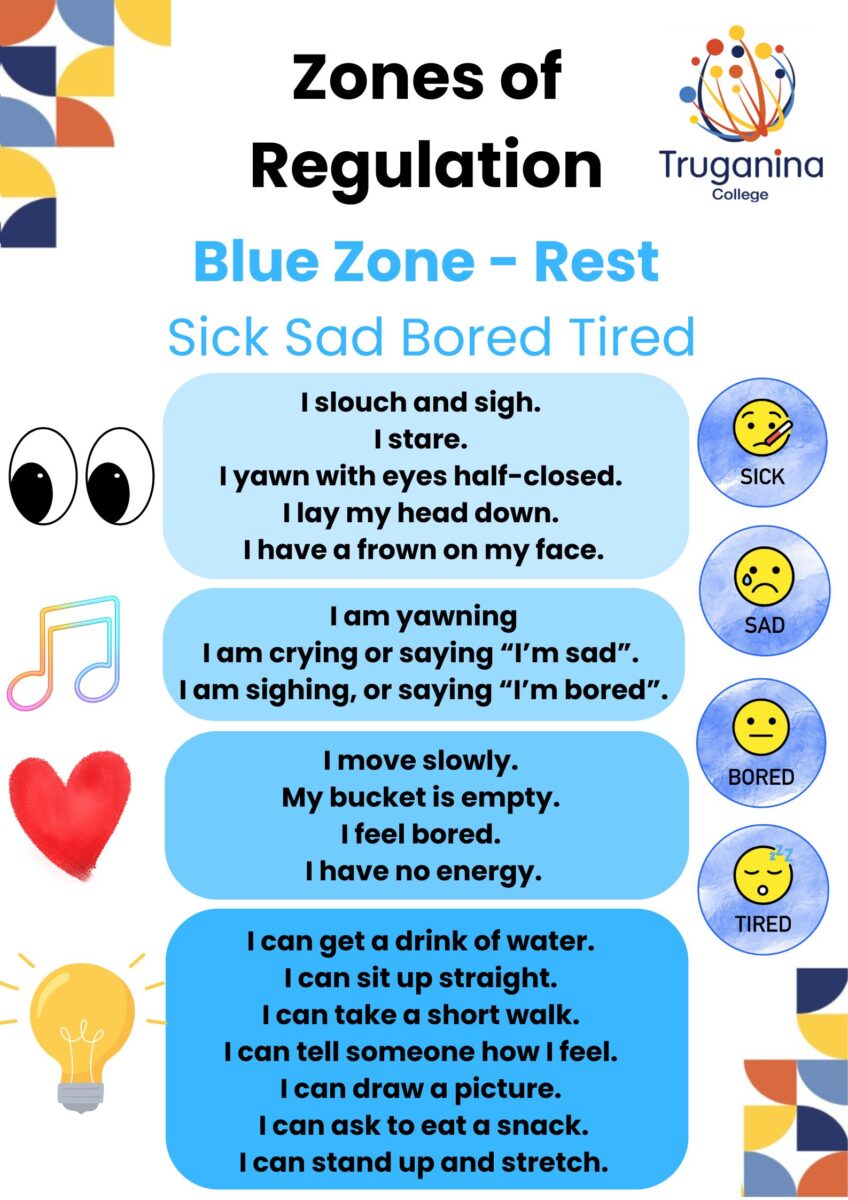
Blue Zone: A low level of alertness, where a person may feel sad, unwell, tired, or bored. The body and brain may feel slow or low in energy.
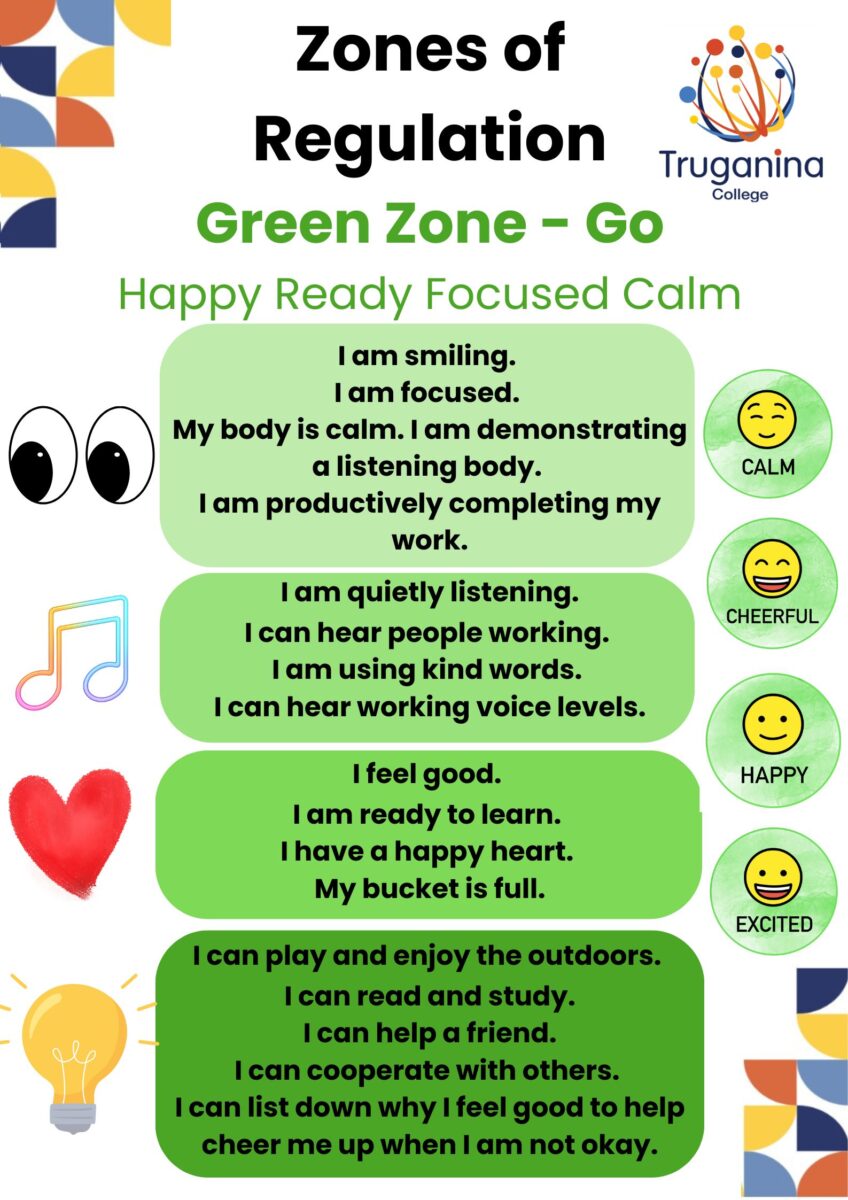
Green Zone: A calm and regulated state where a person feels in control. This zone supports learning, working, and positive social interactions.
Yellow Zone: A heightened state of alertness where emotions such as stress, anxiety, frustration, or excitement may be present. A person may appear restless, fidgety, or sensory-seeking, indicating they are beginning to lose control.
Red Zone: A very high level of alertness involving intense emotions such as anger, panic, or extreme excitement. In this zone, a person is not in control of their body or emotions.
At Truganina College, the Zones of Regulation is used across Foundation to Year 2 to help students develop strong emotional and social skills early in their schooling. This whole-school approach supports students to recognise, understand, and manage their emotions, energy levels, and behaviours.
By using a shared language and consistent strategies, the Zones of Regulation enables students, staff, and families to talk about emotions in a positive and supportive way. To further support self-regulation, all Foundation to Year 2 classrooms include a calm-down space, providing a safe area for students to practise regulation strategies when needed. Classrooms also feature a feelings check-in station, allowing students to identify and communicate which zone they are in throughout the day.
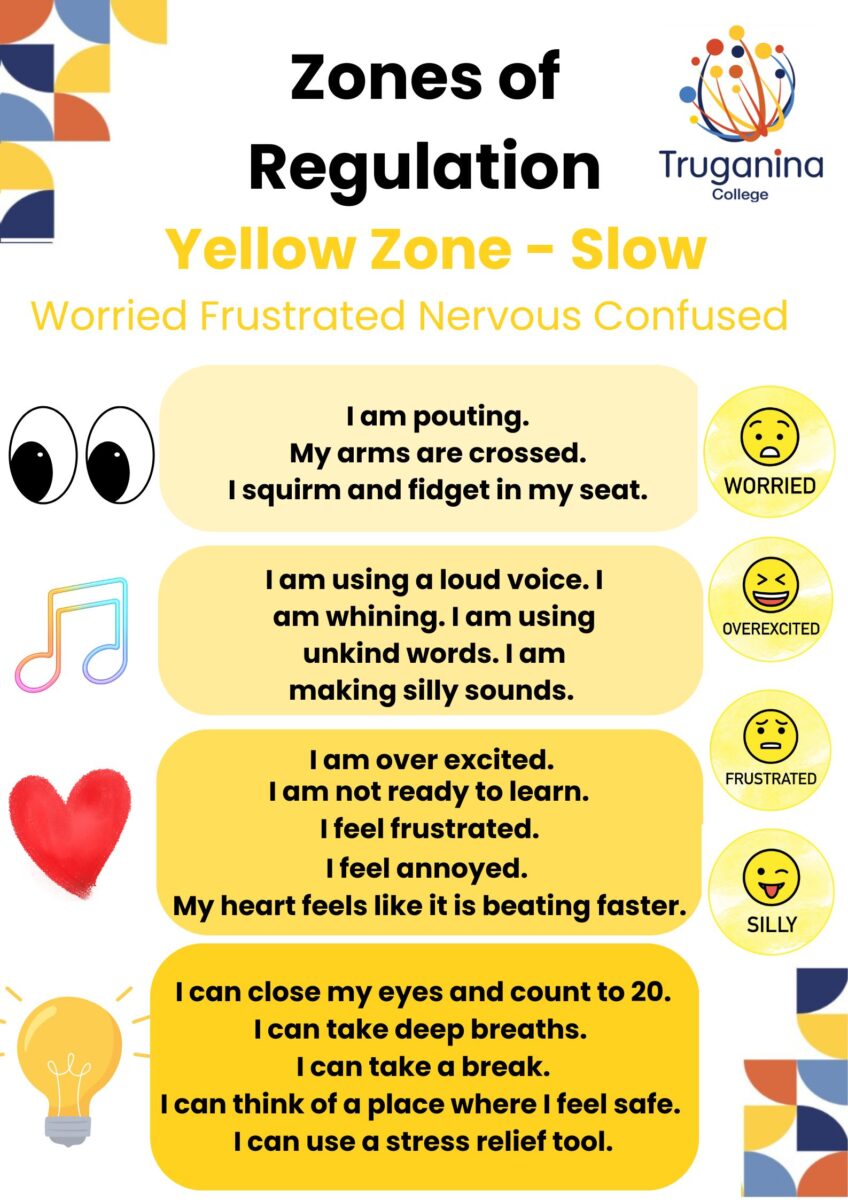
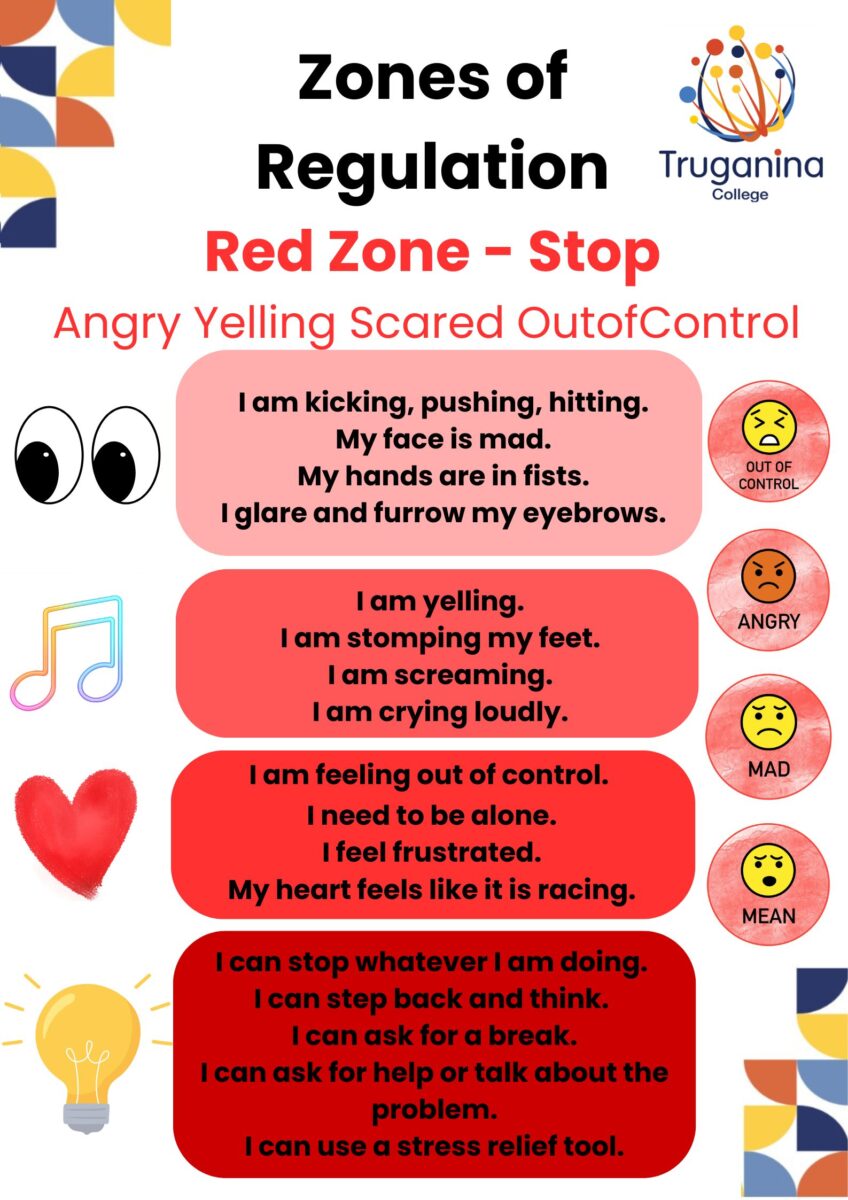
How you can support the Zones of Regulation at home;
- Model the language of the Zones by talking about your own feelings and identifying which Zone you are in.
- Explain and model strategies you use to move to a more appropriate Zone (e.g. “I’m going to take a few deep breaths to help myself get back to the Green Zone.”).
- Teach and practice Zone tools so your child knows what strategies they can use in each Zone (e.g. reading quietly, deep breathing, movement breaks).
- Acknowledge and praise efforts when your child is in the Green Zone or working hard to regulate their emotions (e.g. “I can see you’re using your strategies to stay in the Green Zone.”).
- Help your child identify their Zone by using visual tools such as posters that can be placed on the fridge door or bedroom wall.
- Use sensory activities to support regulation, such as colouring, playdough, stress balls, outdoor play, or quiet reading time.
- Create calm routines and incorporate activities like relaxing music, children’s yoga, deep breathing, or mindfulness to help support emotional regulation.